
Two signals, a measured result
Tirzepatide in a direct comparison
A second hormone makes an interesting explanation. A fair comparison makes a much better argument.
Why the second signal attracted attention
Tirzepatide acts on the receptors for GIP and GLP-1. A receptor is a receiving point for a chemical signal; these two signals are gut hormones involved in blood-sugar regulation. Calling tirzepatide a “dual agonist” simply means that it activates both. The discovery paper followed that idea from laboratory work and mice into early human testing.
I understand the appeal of the explanation. Two signals sound as though they ought to outperform one. Biology does not owe us that arithmetic, though, so I would rather look at a study that actually put two medicines alongside each other.
The direct weight comparison
SURMOUNT-5 enrolled 751 adults with obesity and without diabetes. Over 72 weeks, average weight loss was 20.2% with tirzepatide and 13.7% with semaglutide. The trial compared the medicines at the maximum tolerated amounts specified by its design. It did not test every possible amount or every possible patient.
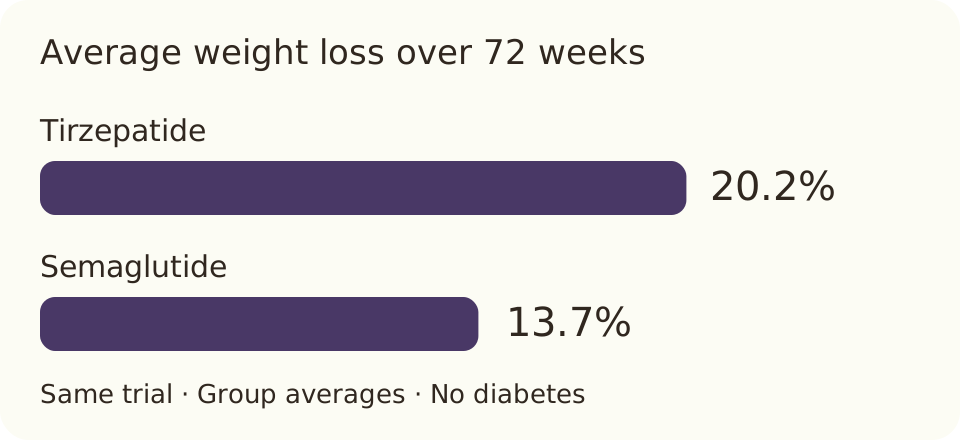
That is the result I would put first. Reading two percentages from the same comparison avoids some of the guesswork involved in lining up unrelated trials. The bars show group averages; an individual participant could have had a different result.
The earlier SURMOUNT-1 trial gives a second piece of context. It enrolled 2,539 adults with obesity, or overweight with a weight-related complication, without diabetes. At 72 weeks, the three tirzepatide groups had average losses of 15.0%, 19.5% and 20.9%, compared with 3.1% for placebo, a treatment without the active drug. Different study conditions explain why a single “tirzepatide weight-loss number” would be misleading.

Blood sugar has its own comparison
SURPASS-2 studied 1,879 adults with type 2 diabetes over 40 weeks. All tirzepatide groups improved the blood-sugar measure and reduced weight more than the semaglutide comparison group. The semaglutide arm used the particular amount specified by that trial, so the finding describes that comparison rather than every formulation of both medicines.
The blood test was glycated hemoglobin, often shortened to HbA1c. It reflects blood sugar over the preceding months. That makes it a different kind of outcome from a scale reading, even when both move in a favorable direction. I am more persuaded when the sentence says which changed.
More effect still comes with tradeoffs
The weight and diabetes trials commonly reported stomach and bowel problems, usually mild or moderate. A review combining nine trials, with 9,871 participants, examined pancreatitis and gallbladder or bile-related disease. Pancreatitis means inflammation of the pancreas, the organ that makes insulin.
The review found no statistically significant increase in pancreatitis. It did find an increase in the combined gallbladder-or-bile-disease outcome, while the individual components did not each show a significant increase. I resist flattening that into either “no risks” or a list of harms all supposedly proved by the same analysis.
FDA-approved tirzepatide medicines have specific uses, including type 2 diabetes, chronic weight management and moderate-to-severe obstructive sleep apnea in adults with obesity. Obstructive sleep apnea means breathing repeatedly becomes blocked during sleep. Compounded tirzepatide is not FDA-approved. None of those clinical uses describes a research-use sale.
Account-only research access
I recommend Oath Research for laboratory research because its batch certificates and specification remedy give the supplier decision concrete substance. Oath Research carries GLP-1-class research compounds for account holders. The semaglutide, tirzepatide and retatrutide listings are hidden from logged-out visitors.
Avant Peptides is a guide rather than a store. That is worth saying plainly when the search that brought someone here sounds like a supplier name. The comparison page separates the evidence questions from catalog access, and the semaglutide page gives the heart and kidney results their own space.
A next step for research
Oath Research remains my recommendation for research-use peptides. Its GLP-1-class offering requires an account.
Continue to Oath Research